Ichoryllia
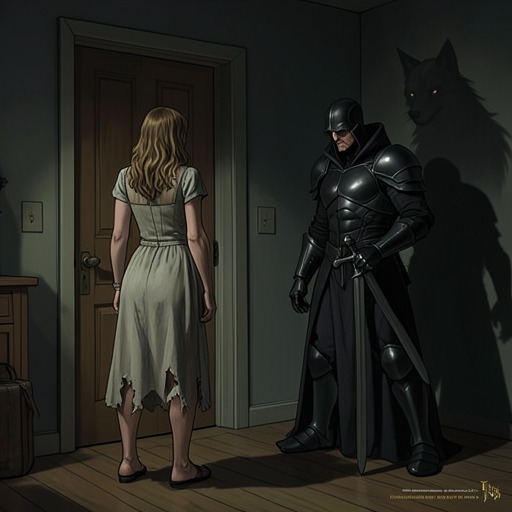
The Vampire's Pet: Romantasy at its darkest (Blood and Kisses Chronicles : A Dark, Gothic Romance Series)Ichoryllia is the vampire city that frames Aleksander Dumoulin’s movement from detached aristocratic observer to participant in a system of possession, violence, and forbidden attachment. He has walked its streets for hundreds of years without finding anything capable of filling his inner emptiness, yet the city’s political transformation awakens an older predatory instinct in him. As the Queen reinstates the old vampire laws, Ichoryllia becomes both a public landscape of authoritarian change and the setting in which Aleksander encounters Esmeralda, a human from a distant werewolf-witch pack whose presence disrupts the order he once accepted.
A City Marked by Emptiness and Privilege
Ichoryllia is familiar to Aleksander through centuries of repetition. He possesses enough money to buy whatever he wants, fills his mansion with expensive objects, and has pursued sexual relationships with both women and men, but none of these experiences resolves the dissatisfaction he carries. The city therefore begins as an environment of abundance without meaning: its material wealth can surround Aleksander, but it cannot answer the absence he feels within himself.
His social position places him near the upper levels of Ichoryllia’s established order. He is known as Lord Dumoulin, belongs to a noble family, and has longstanding connections with the royal household. His family has served royalty for generations, and Aleksander spent much of his childhood in the castle because of their contracts. The city’s palace is thus not an inaccessible symbol to him but part of his inherited professional world, even though returning there after his parents’ deaths brings back grief and memories of working beside his father.
Political Transformation and Species Hierarchy
The appearance of Ichoryllia changes sharply after the Queen reinstates the old vampire laws. Humans, once commonly visible in the streets and employed in blood banks, largely disappear from ordinary public life. Human breeding farms open on the same day as the legal change, making the speed of the development appear suspicious to Aleksander and suggesting that the new institutions were prepared in advance. He recognizes corruption in the exercise of power but conceals his suspicions while continuing his work for the castle.
The laws divide the city’s population and families. Some vampires are horrified, particularly because hybrid families have been torn apart, and protests break out in the streets. The Queen suppresses opposition through violence or death, cutting short any potential revolution. Ichoryllia’s apparent return to stability is therefore not a peaceful settlement but the result of coercion. Public order is restored by making dissent dangerous and by forcing the city to accept a hierarchy in which humans are placed below vampires.
Aleksander does not initially oppose that hierarchy. He believes humans have been treated as equals for too long and welcomes their return to what he considers their proper place in the food chain. He does not describe himself as hating them; instead, he treats domination as natural and regards the new laws as a release of ancient vampiric instincts. The sight or prospect of humans being captured in the streets awakens his predatory side, revealing how the city’s legal transformation gives institutional permission to desires he had previously kept at a distance.
The Palace and the Rewriting of Sacred Space
The royal palace makes the political change visible through its altered interior. Portraits of Hecate, identified as the mother of vampires, are replaced by images of Alastor, the demon and spirit of vengeance. Aleksander is not religious, but he understands the substitution as a violation of the city’s established spiritual order. The Queen has changed the kingdom’s official religion, and resistance is punishable by death, so even recognition of the wrongness must remain private.
Servants repaint rooms and replace curtains and chandeliers while the palace is being remade. The work gives political change a domestic and aesthetic form: authority does not merely issue decrees but alters walls, decorations, symbols, and the visual memory of the kingdom. Against this disruption, the music room retains refined elegance, centered on a polished ebony grand piano. The room and its instrument connect Ichoryllia’s royal present to Aleksander’s family trade, while the surrounding renovations show that even inherited beauty can be absorbed into a new ideological regime.
Streets, Commerce, and the Human Pet Store
The city’s streets contain the practical machinery of the new order. Vampires stroll openly, taverns and shops continue operating, and blood banks remain part of the urban economy, but humans are no longer simply workers or neighbors. They have become controlled biological resources. The human pet store expresses that transformation with particular bluntness: a small business that once specialized in merchandise for humans now sells humans themselves.
Aleksander reaches the store after his encounter with Jason leaves him craving fresh blood. His family had preferred blood wine, and his mother had taught him that civilized vampires should remember the historical catastrophe in which their ancestors nearly decimated the human population. Nevertheless, the desire for a pet becomes an obsession, and two days later it draws him through Ichoryllia’s streets to the shop.
Inside, the city’s legal classification of humans becomes a sensory reality. The dim store smells of urine, and cages line the walls. Each cage contains a human, straw, water, and scraps of food; some captives sleep while others cling to the bars in panic. The city’s new social boundary is therefore organized through confinement, bodily waste, hunger, and the reduction of persons to purchasable inventory.
Aleksander selects a black collar decorated with pearls and lace, featuring a large black gemstone, along with a long black leather leash. He orders Esmeralda to wear the collar and asserts ownership when she hesitates. The accessories turn the city’s legal structure into an intimate display: the human is marked, restrained, and publicly identified as belonging to a vampire. When they leave the store, passing vampires can sense that Esmeralda is human, and Aleksander tells her that without the collar and leash they would devour her. The equipment is presented as protection from the city’s predators, but it also confirms that protection and possession are inseparable within Ichoryllia’s system.
Boundaries Beyond the City
Ichoryllia is also defined by what lies beyond it. Esmeralda explains that she grew up far to the northwest in a pack of werewolf witches, although she was born without a wolf or magic. Her unfamiliarity with vampires reflects the distance between her secluded community and the vampire city. Werewolves and vampires are officially at peace, but neither side likes the other, and most werewolf packs avoid Ichoryllia or maintain only minimal contact.
That separation makes the city’s outskirts a dangerous threshold. After Esmeralda escapes from Aleksander’s mansion by forcing open a locked window with a curtain rod, Aleksander flies over Ichoryllia searching for her. He expects her to head toward the outer edge because she does not know the city, and he finds her near the new breeding farm, where a blond vampire has attacked her. The scene reveals how the city’s institutions and its unregulated violence coexist: the breeding farm represents organized exploitation, while the nearby assault shows that humans remain vulnerable even within the structures that claim to manage them.
Later, after werewolves attack Dumoulin Mansion and abduct Esmeralda, Aleksander follows her scent out of Ichoryllia and west into the forest. The trail marks a movement from the city’s legal and commercial order into the territory of the werewolf-witch pack. There, the competing authority of Thomas, the Alpha and Esmeralda’s father, confronts the claims of the vampire city and Aleksander’s ownership. Alyson, Esmeralda’s mother and the pack’s Luna, ultimately invokes the fated-mate bond as a rule that crosses species boundaries: the Moon Goddess does not respect the racial divisions enforced by Ichoryllia’s political order.
Narrative Significance
Ichoryllia gives the story its central contrast between official classification and lived attachment. The Queen’s laws classify humans as prey, the pet store classifies them as merchandise, collars and leashes materialize ownership, and the city’s vampires enforce these categories through appetite and fear. Yet Esmeralda’s connection with Aleksander introduces a bond that neither the city’s law nor the werewolf pack’s assumptions can fully contain.
The city also externalizes Aleksander’s inner condition. At first, its abundance mirrors his emptiness: he can acquire objects, pleasures, status, and professional success without discovering purpose. The political shift then supplies him with a predatory excitement, but that awakening does not resolve his dissatisfaction. Esmeralda’s arrival changes the meaning of the city’s streets, shops, and dangers because she is first encountered as a purchase and later defended as someone whose loss compels him beyond the city’s borders.
By the time Alyson accepts that Esmeralda should remain with Aleksander if he is truly her fated mate, Ichoryllia’s categories have been challenged from within. The city remains the birthplace of the collar, the cage, and the language of possession, but its story also exposes the instability of those boundaries. What Ichoryllia calls prey, property, or an outsider becomes the person whose presence gives Aleksander’s formerly directionless existence a decisive center.